R · Realistic
The Builder
Hands-on. Loves making, fixing and taking things apart.
Try at home: LEGO, craft kits, gardening, small fix-it jobs
TraitLens RIASEC test · ages 6–13 · for parents
See it in 15 minutes. Find your child’s natural strengths, their real khubi, from how they think and what they love. You get a plain-language report and three things to try this week.
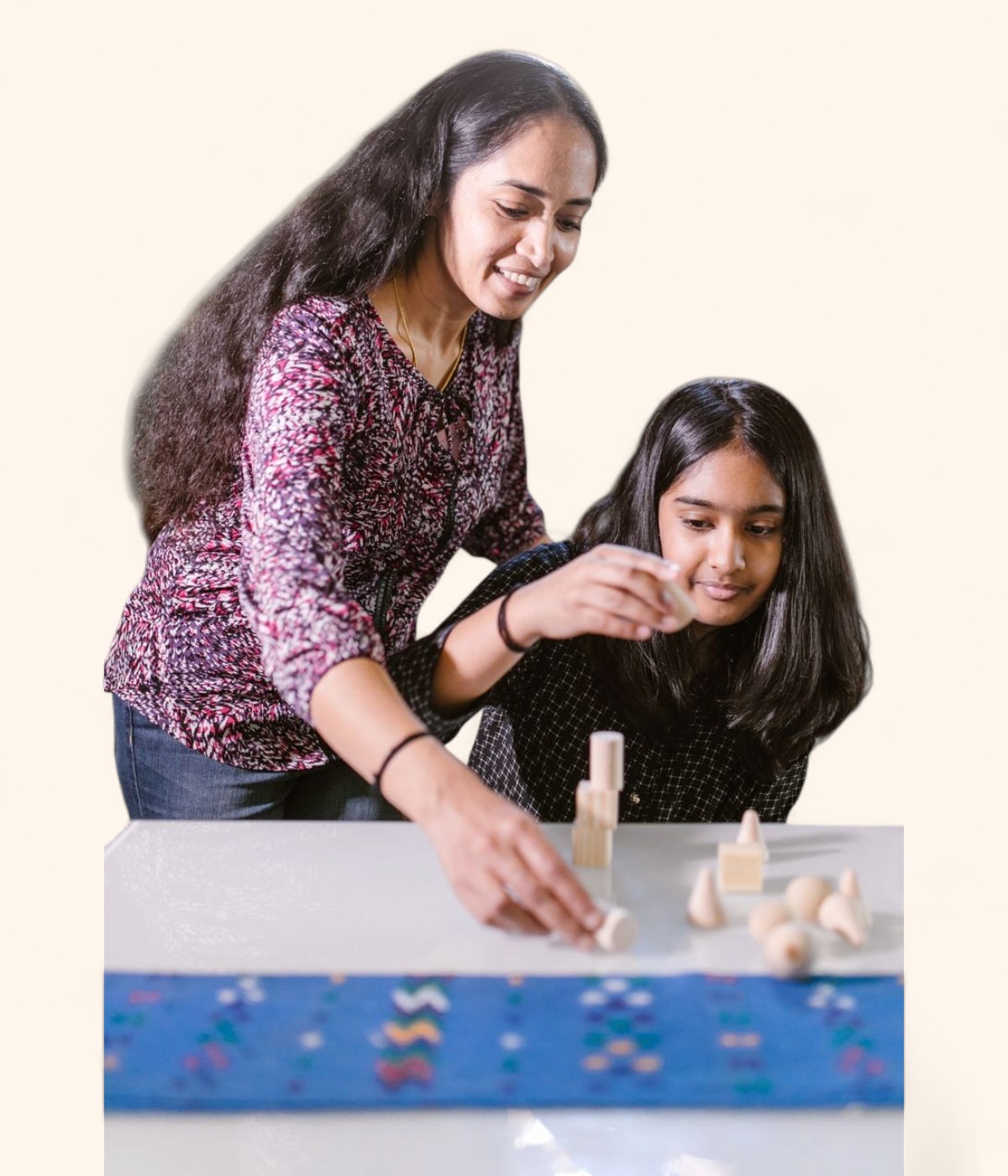 Ages 6–13, answered together
You’re not the only parent asking
The worries that came up most in our research with parents of 6–13 year olds.
Common questions from our research, in parents’ own words. Not customer reviews.
Not a fingerprint test
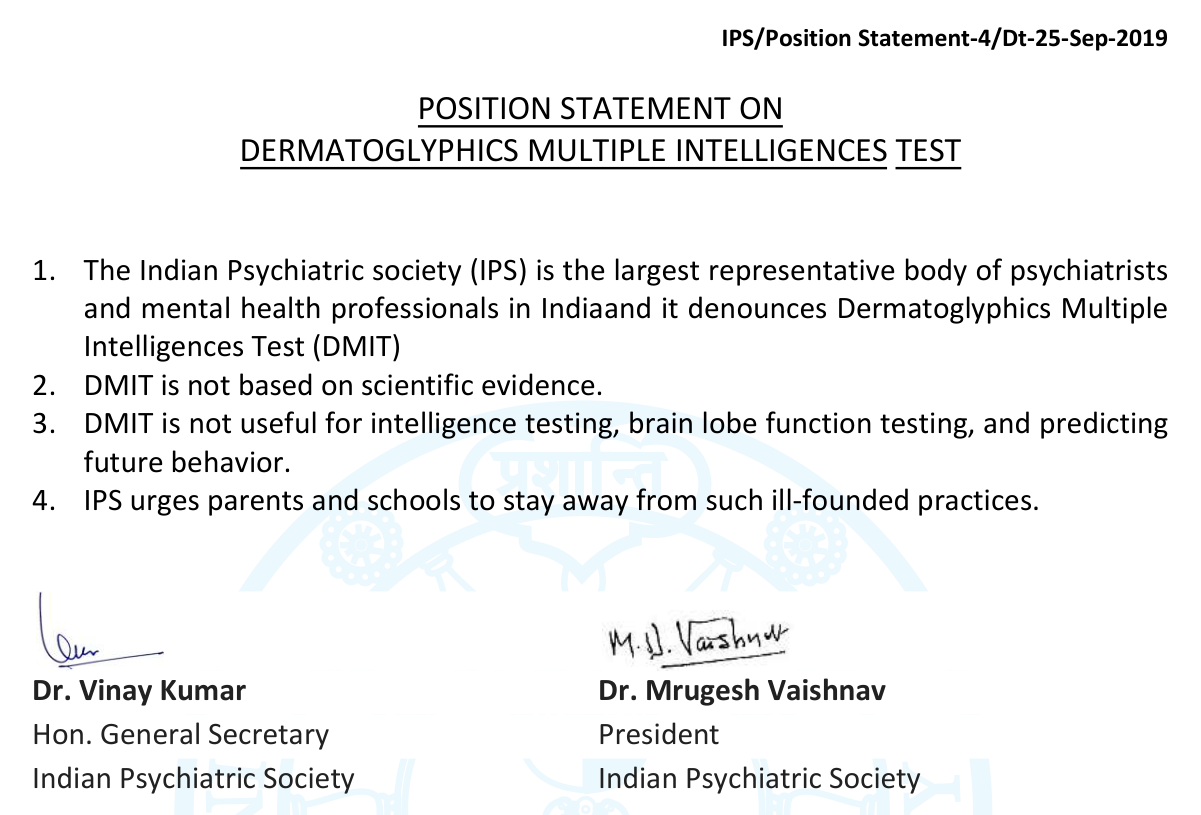
“DMIT is not based on scientific evidence.” That is the Indian Psychiatric Society, in its 2019 position statement, urging parents and schools to “stay away from such ill-founded practices.” Your child’s talent is not in their fingerprints. The TraitLens RIASEC test asks about your child.
| TraitLens RIASEC test | Fingerprint (DMIT) tests | |
|---|---|---|
| What it looks at | How your child thinks and what they love | Fingerprint patterns |
| Based on | RIASEC interest research, used for decades | “Not based on scientific evidence” (Indian Psychiatric Society, 2019) |
| The report | Plain words, plus this week’s plan | Often numbers nobody explains |
| Price | Full report ₹499 | ₹4,000–14,000 per child |
On record · 25 Sep 2019
The science behind it
RIASEC, also called the Holland Code, comes from the psychologist John Holland. It is one of the most researched models in career psychology, and it sorts interests into six types. TraitLens uses it with questions written for ages 6–9, and a separate version for 10–13. Your child gets their own mix of all six.

R · Realistic
Hands-on. Loves making, fixing and taking things apart.
Try at home: LEGO, craft kits, gardening, small fix-it jobs
I · Investigative
Curious. Asks “why?” all day, loves puzzles and how things work.
Try at home: Home experiments, nature walks, puzzle games
A · Artistic
Big imagination. Draws, sings, acts, tells stories.
Try at home: Art supplies, music, storytelling, role play
S · Social
Kind and caring. Likes teamwork and looking after others.
Try at home: Group games, helping at home, kindness projects
E · Enterprising
Takes charge. Full of ideas, loves to decide and persuade.
Try at home: Small decisions at home, shopkeeper play, group projects
C · Conventional
Likes order. Sorts, plans and follows the rules well.
Try at home: Sorting games, simple schedules, structured play
Every child has all six, in a different mix. These are interests to nurture, not marks, not IQ, and never a label.
Inside the report
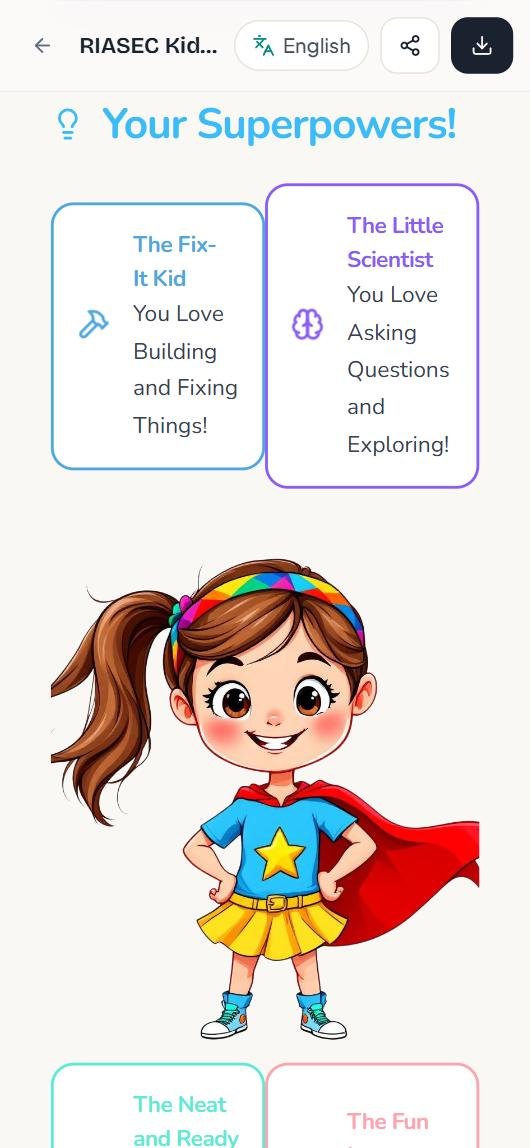
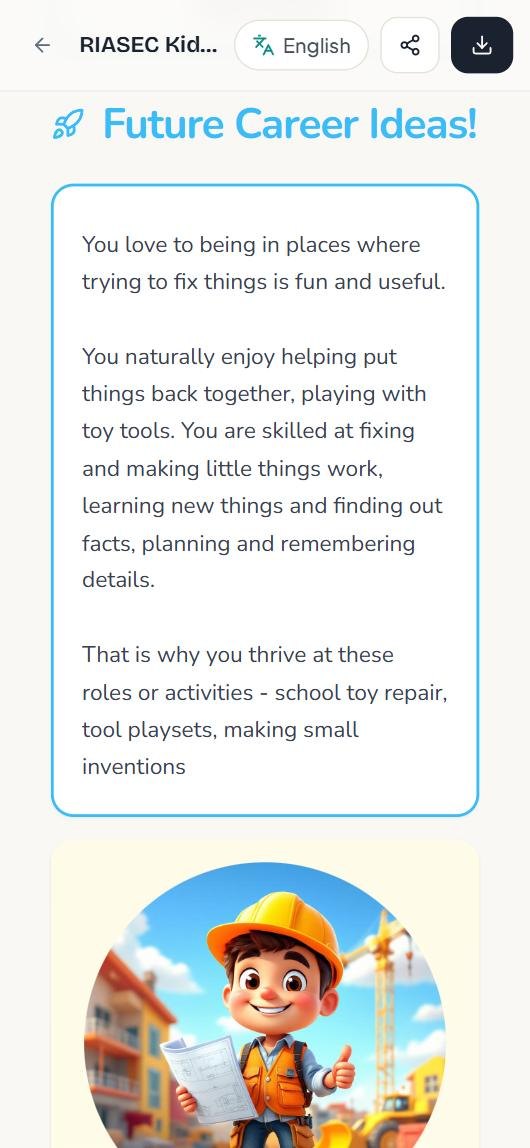
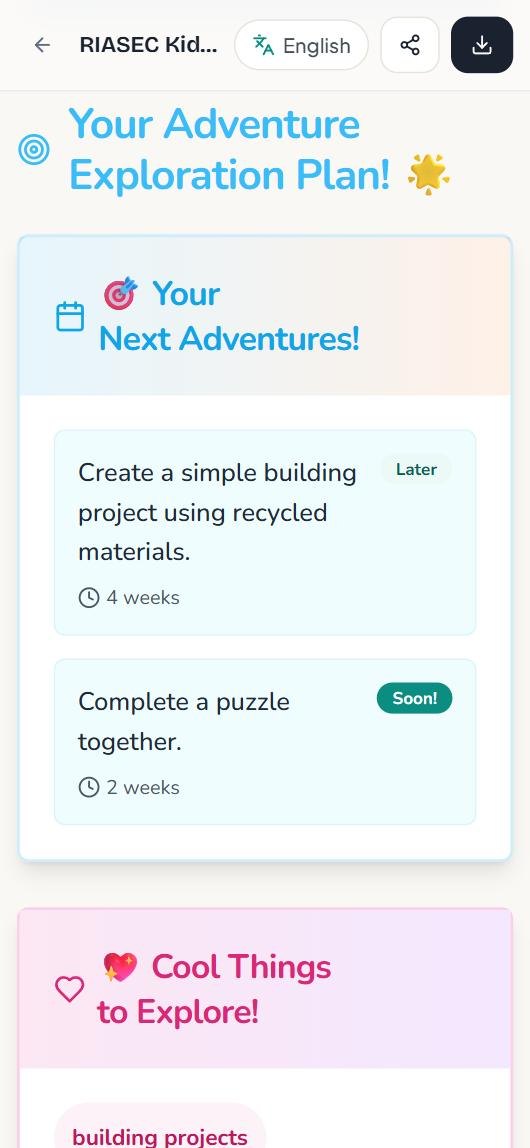
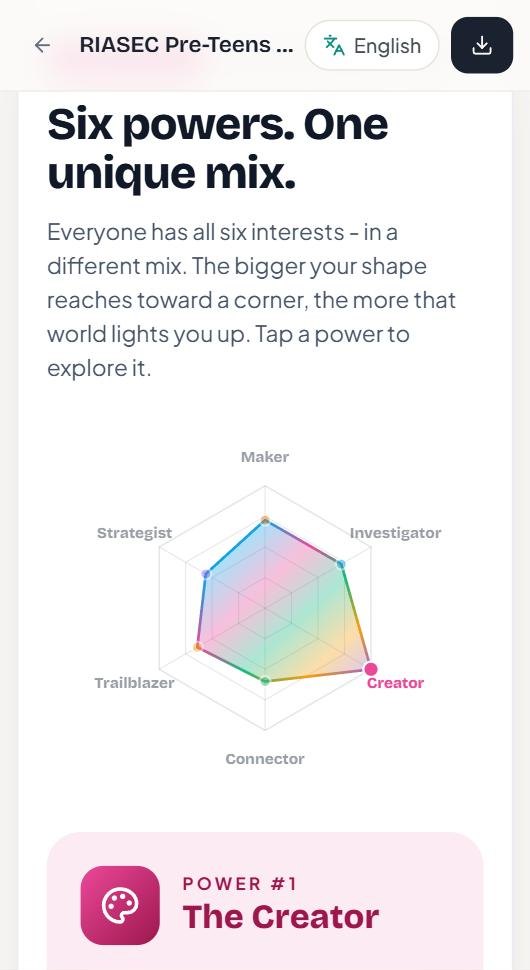
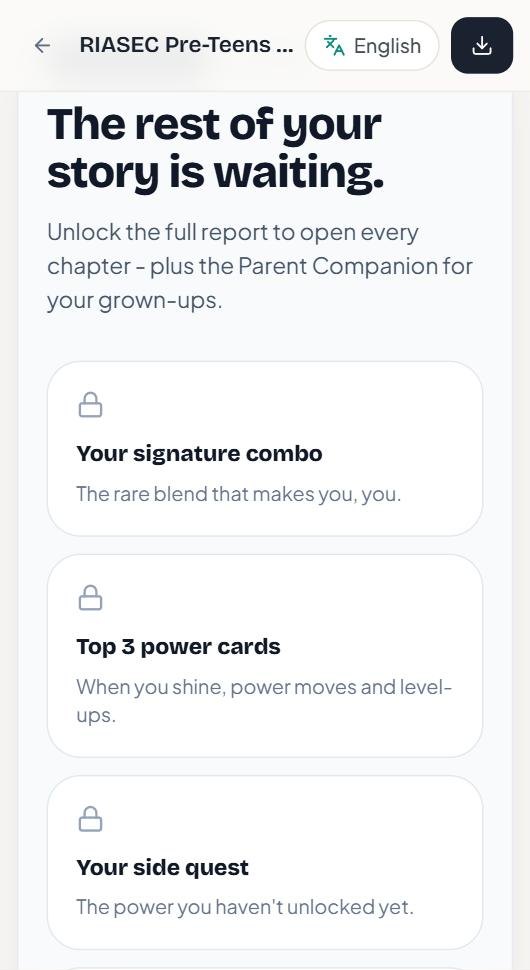
Two reports in one: a fun one for your child, in their words, and a calm guide for you on how to nurture what you see. Real screens below, from a test account.
Your Super Skills Adventure · the 6–9 report
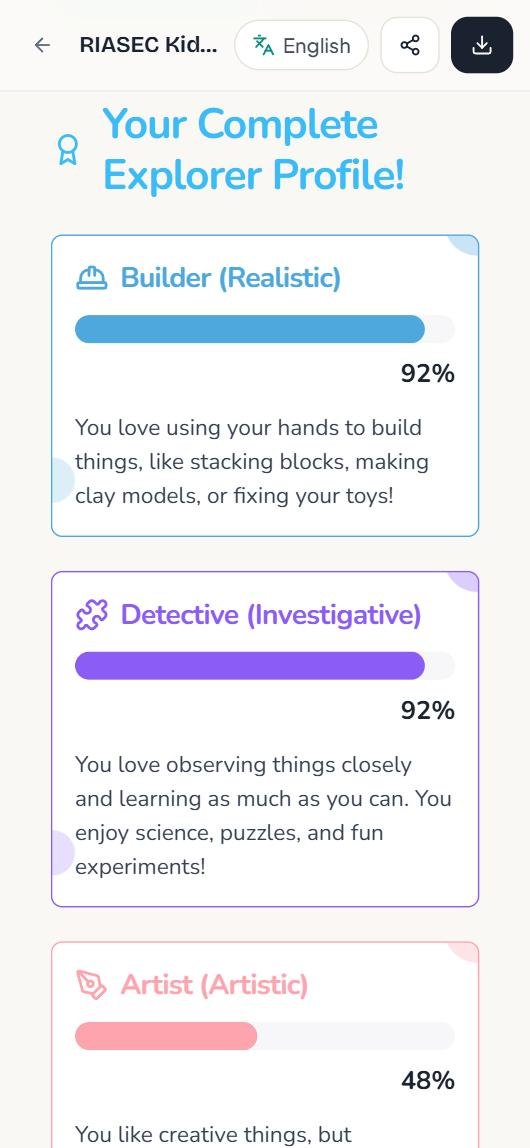
Origin Story · the 10–13 report, plus a Parent Companion
Parent’s guide · written for you, not your child
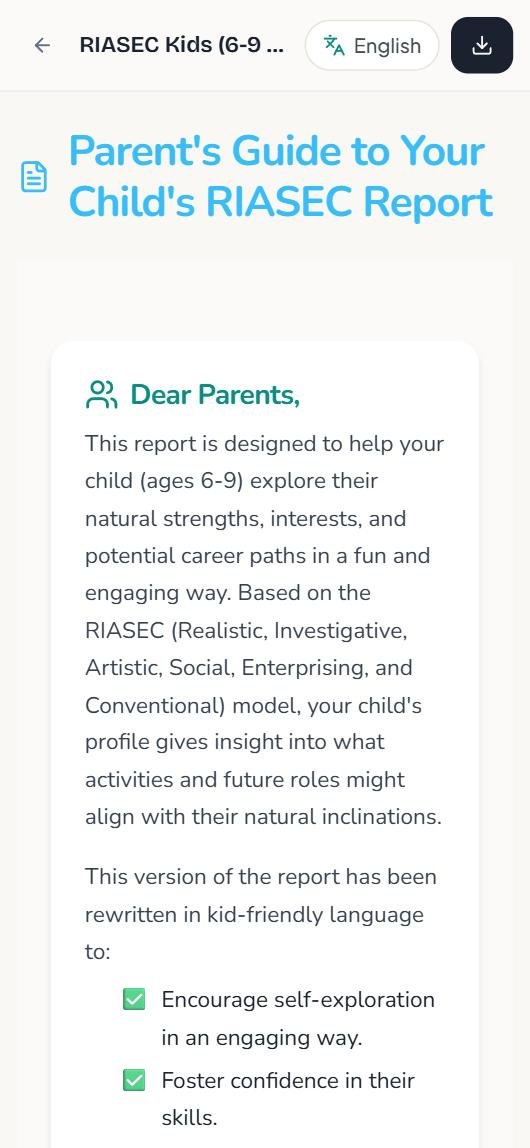
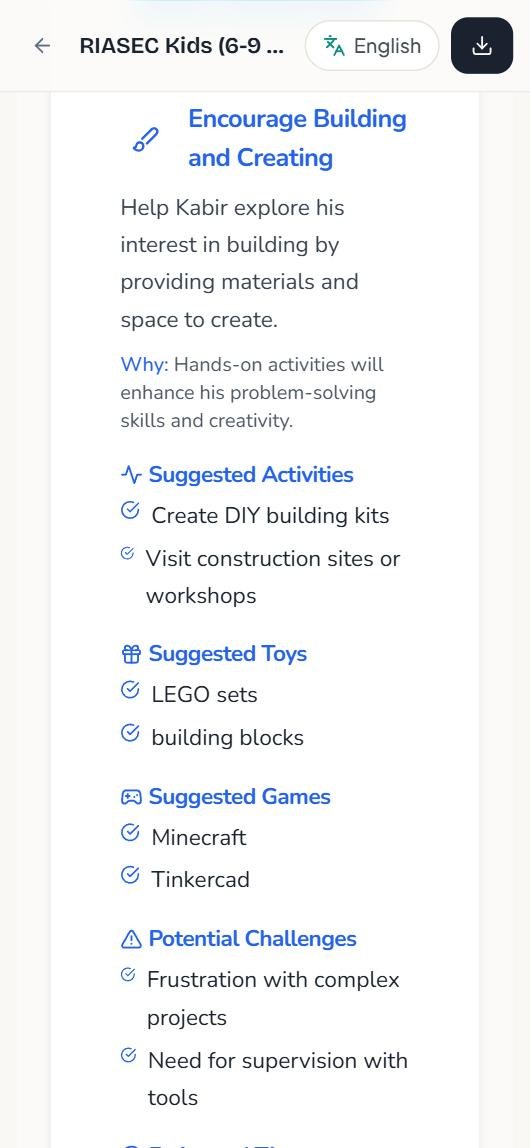
The full report opens every chapter and downloads as a PDF, in Hindi or English.
Made for their age
Play-based questions you answer with your child. Strengths, and activities for this week. No career talk.
Questions your child answers with you. Strengths, the subjects they lean towards, and what to test next.
How it works
Simple questions about what your child enjoys and how they think. Pick the age band.
Their natural strengths, lasting vs passing interests, in Hindi or English.
Three small activities, and which class is worth paying for next.
The full report
Full report
The full report and a weekly plan, written for parents.
Fingerprint tests charge ₹4,000–14,000 per child.
If it doesn’t sound like your child
Parents who used TraitLens
From resistance to confidence
My 10-year-old finally stopped hating studies. The report showed he’s an Organizer + Creator. We changed activities, and his confidence shot up.
Clarity we wish we had earlier
This saved us years of confusion. The stream recommendations were spot on. Feels like expert career guidance at home.
Straight talk
We'd rather lose a sale than sell you something that won't help.
Questions
No. The Indian Psychiatric Society says “DMIT is not based on scientific evidence.” This uses no fingerprints and no palm reading. It asks about your child’s interests and thinking, using RIASEC interest research.
No, and it doesn’t try. It shows strengths to nurture now, and you decide what to do with them.
The full report is ₹499 per child, one time. It never renews.
The report separates lasting interests from passing ones and suggests how to test one, like three weeks of a single activity.
Both. The report shows the strengths to build on and the growth areas, with one thing to do about each this week.
Fingerprint tests read patterns that never change. This asks how your child thinks and what they love now, with questions made for their age. If it doesn’t sound like your child, the 30-day refund covers you.
Screens can hide real interests. The plan suggests what to try instead.
It takes about 15 minutes, and younger children answer with you.
It isn’t built for that. Please see a specialist.
Answers are used only to make the report. They are never sold or shared.
Still have a question? Ask us on WhatsApp
Your move